Whether you're replacing worn components, considering a retrofit or simply wondering what makes BMW's 2NH braking system so desirable, you've come to the right place.
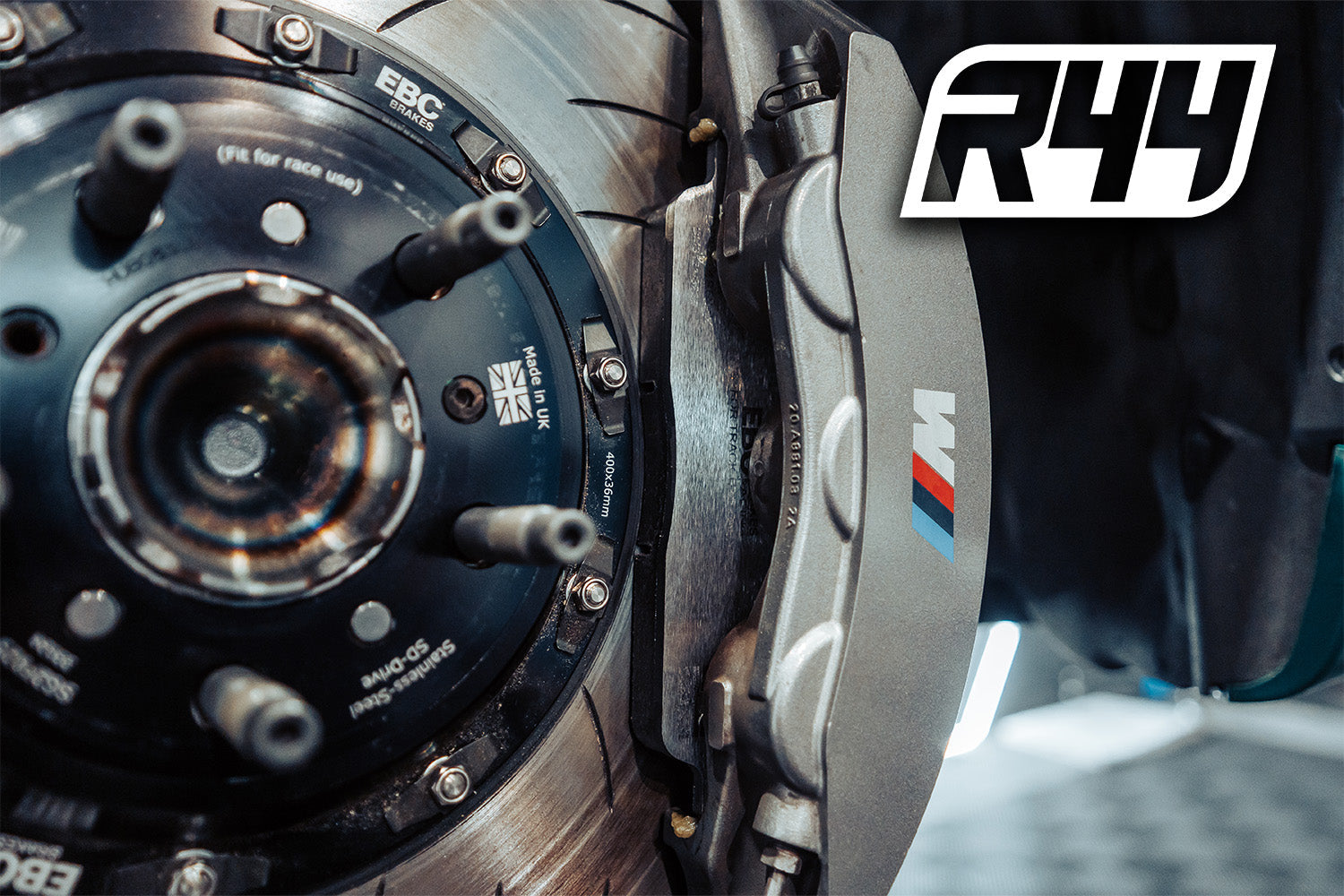
Originally fitted to some of BMW M's most capable performance cars, the 2NH M Compound brake system has become one of the most sought-after OEM brake upgrades in the BMW community. With larger discs, significantly more capable calipers and exceptional thermal capacity, it's a proven factory solution for fast road driving, spirited B-road use and regular track days.
In this guide, we'll explain exactly what BMW's 2NH brakes are, which models they came fitted to, how they differ from the standard F87 M2 Competition brakes, and where to buy genuine BMW and aftermarket replacement parts.
What Are BMW 2NH Brakes?
BMW option code 2NH refers to the M Compound Braking System fitted to several high-performance BMW M models.
Unlike the blue M Sport brakes found on many BMWs, the 2NH system features substantially larger hardware designed to cope with the increased weight, power and sustained braking demands of BMW's flagship M cars.
The system includes:
- Six-piston fixed front Brembo calipers
- Four-piston fixed rear Brembo calipers
- Two-piece floating M Compound brake discs
- Larger diameter and thicker brake rotors
- Increased thermal capacity for repeated heavy braking
- M Compound disc technology for improved heat management and reduced unsprung weight compared to equivalent one-piece discs
Although enthusiasts often refer to them simply as "2NH brakes", they are more accurately known as BMW's M Compound Brake System.
Which BMW Models Have 2NH Brakes?

The large M Compound 2NH setup was factory fitted to a relatively small number of BMW M models.
These include:
- BMW F10 M5
- BMW F06 M6 Gran Coupé
- BMW F12 M6 Convertible
- BMW F13 M6 Coupé
- BMW F87 M2 Competition (market dependent)
- BMW F87 M2 CS
The same Brembo caliper family was also used with BMW's optional Carbon Ceramic Brake package on:
- BMW F80 M3
- BMW F82 M4
- BMW F83 M4 Convertible
The carbon ceramic-equipped cars share the same six-piston front and four-piston rear caliper design, although they use different mounting hardware and carbon ceramic brake discs.
Because of this shared architecture, many replacement components and performance upgrades are interchangeable between these vehicles.
Why Are BMW 2NH Brakes So Popular?
The popularity of the 2NH system comes down to one simple fact: they work exceptionally well.
Compared to the standard braking system fitted to the F87 M2 and many other BMW M models, the larger discs and calipers provide:
- Greater resistance to brake fade
- Improved heat dissipation
- More consistent pedal feel during repeated hard braking
- Increased braking torque
- Better performance on track
- Factory BMW fit and finish
Unlike many aftermarket big brake kits, the 2NH setup also retains OEM reliability, parts availability and compatibility with BMW's ABS and DSC systems.
For many owners, it's the perfect balance between factory engineering and serious braking performance.
F87 M2 & M2 Competition: Standard Brakes vs 2NH Brakes
One area that causes confusion is the braking systems fitted to the F87 M2 range.
The standard F87 M2 and early M2 Competition use BMW's blue M compound brakes, which are already excellent for road use.
The optional (or market-dependent) 2NH setup increases both rotor diameter and caliper size considerably.
Standard F87 M2 / M2 Competition Brakes
Front
- Four-piston fixed caliper
- 380 × 30 mm brake discs
Rear
- Four-piston fixed caliper
- 370 × 24 mm brake discs
Approximate complete system weight: 58.18 kg
BMW 2NH M Compound Brakes
Front
- Six-piston fixed caliper
- 400 × 36 mm floating brake discs
Rear
- Four-piston fixed caliper
- 380 × 30 mm floating brake discs
Approximate complete system weight: 74.04 kg
Compared to the standard setup, the complete 2NH braking system weighs approximately 15.86 kg more.
While this increase in weight is significant, it brings a substantial increase in thermal capacity, braking torque and fade resistance, making it a worthwhile trade-off for drivers who regularly push their cars hard or spend time on circuit.
Standard vs 2NH Brake Specifications
| Component | Standard F87 M2 / M2 Competition | BMW 2NH |
|---|---|---|
| Front calipers | 4-piston | 6-piston |
| Rear calipers | 4-piston | 4-piston |
| Front discs | 380 × 30 mm | 400 × 36 mm |
| Rear discs | 370 × 24 mm | 380 × 30 mm |
| Total weight | 58.18 kg | 74.04 kg |
| Weight difference | — | +15.86 kg |
Are 2NH Brakes Better?
For everyday driving, the standard F87 braking system is more than capable.
However, if your BMW regularly sees:
- Track days
- Nürburgring laps
- Fast road driving
- High-power tuning
- Heavy braking from high speeds
the larger 2NH system offers genuine performance benefits.
The increased rotor mass absorbs significantly more heat before temperatures become critical, while the larger calipers provide a more even pressure distribution across the brake pads.
This results in greater confidence under repeated heavy braking, especially during long sessions on track.
Can You Retrofit BMW 2NH Brakes?
Yes.
Retrofitting genuine BMW 2NH brakes has become a popular upgrade for owners looking for OEM braking performance without moving to an aftermarket big brake kit.
Many enthusiasts retrofit the complete system using genuine BMW components sourced from donor vehicles or new OEM parts.
Depending on the vehicle, the conversion typically requires:
- Front calipers
- Rear calipers
- Front brake discs
- Rear brake discs
- Brake pads
- Dust shields (on some applications)
- Brake hoses
- Mounting hardware
Wheel clearance should always be checked before carrying out a conversion, as the 400 mm front discs require considerably more space than the standard setup.
OEM vs Aftermarket Replacement Parts
One of the biggest advantages of BMW's 2NH system is the excellent availability of replacement parts. Owners can choose between genuine BMW components or high-quality aftermarket alternatives depending on how the car is used.
Genuine BMW Components
OEM brake discs and pads provide the same braking characteristics the vehicle left the factory with and are ideal for owners wanting to maintain original performance and refinement.


EBC Brakes

For owners looking for increased braking performance, EBC offers a range of replacement components for the 2NH system, including high-performance brake pads, performance brake discs, and street and track-focused friction compounds. These are particularly popular with drivers who regularly attend track days or simply want improved braking confidence without fitting a full aftermarket big brake kit.


Ferodo & Pagid Racing
For dedicated track use, Ferodo and Pagid also produce high-performance friction compounds for the 2NH caliper, giving serious drivers even more choice when specifying their braking setup.


Where to Buy BMW 2NH Brake Parts
At R44 Performance, we stock a growing range of replacement parts for BMW's 2NH M Compound braking system. Whether you're carrying out routine maintenance or refreshing a heavily used braking system, you'll find both genuine BMW and carefully selected aftermarket options, including:
- Genuine BMW 2NH front brake discs – F87 M2 Competition 400mm front discs
- Genuine BMW 2NH rear brake discs – F87 M2 Competition 380mm rear discs
- Genuine BMW brake pads – front pads and rear pads
- EBC replacement brake discs – F87 M2 Competition and F10 M5 / M6 floating front discs
- EBC performance brake pads – Yellowstuff, Bluestuff and Racing RP-X
- Ferodo & Pagid track pads – Ferodo DS2500 and Pagid Racing RSL29
- Brake wear sensors, brake fluid and installation accessories
Every product is selected specifically for BMW enthusiasts, ensuring the correct fitment and dependable performance whether your car is used on the road or the circuit. If you're unsure which components your vehicle requires, our team can help identify the correct parts for your exact model and braking setup.

Frequently Asked Questions
What does BMW option code 2NH mean?
2NH is BMW's option code for the factory M Compound braking system featuring six-piston front calipers, four-piston rear calipers and larger floating brake discs.
Which BMWs have 2NH brakes?
The large M Compound setup was fitted to the F10 M5, F06/F12/F13 M6, F87 M2 Competition and F87 M2 CS. The same caliper family also appears on F80 M3 and F82/F83 M4 models equipped with Carbon Ceramic Brakes.
Are 2NH brakes worth upgrading to?
For owners who regularly drive on track, run increased engine power or simply want the best possible OEM braking performance, the 2NH system is widely regarded as one of the best factory brake upgrades available.
Are BMW 2NH brakes Brembo?
Yes. The calipers are manufactured by Brembo specifically for BMW M, although they are branded with the BMW M logo rather than Brembo branding.
Does the 2NH system weigh more?
Yes. Compared with the standard F87 M2 / M2 Competition brakes, the complete 2NH setup weighs approximately 15.86 kg more due to the larger calipers and significantly larger brake discs.
Final Thoughts
BMW's 2NH M Compound braking system has earned its reputation for good reason. Developed for some of the brand's most capable M cars, it delivers exceptional stopping power, excellent heat management and the confidence needed for repeated hard use.
Whether you're maintaining an F10 M5, refreshing the brakes on your F87 M2 CS or planning an OEM retrofit, genuine BMW and high-quality aftermarket replacement parts remain readily available.
If you're looking for BMW 2NH brake discs, brake pads or replacement components, R44 Performance stocks genuine BMW, EBC Brakes, Ferodo and Pagid Racing options to help keep your braking system performing at its best.