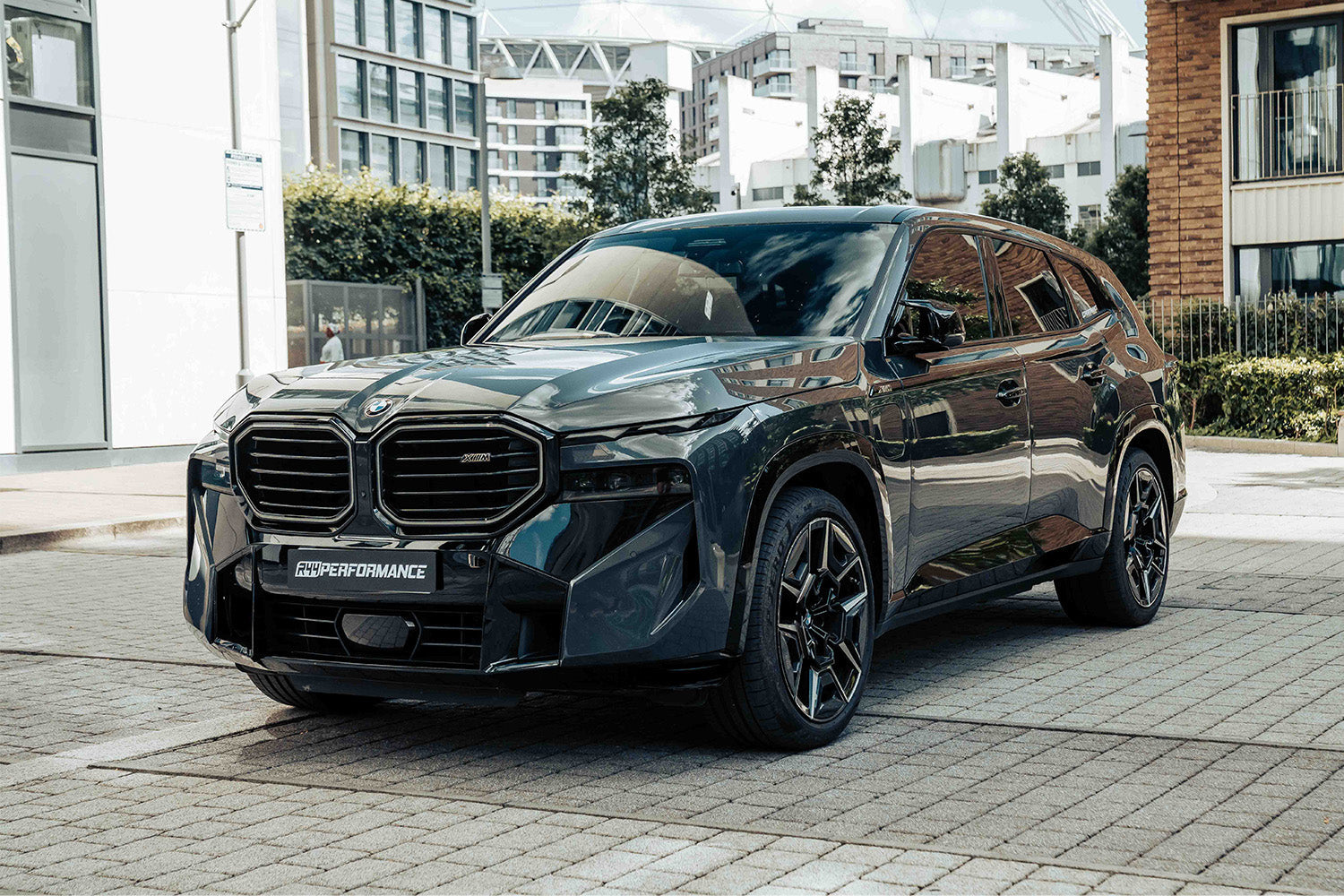
Few modern BMWs have divided opinion quite like the BMW G09 XM.
Launched as BMW M's flagship SUV, the XM is enormous, extremely powerful, packed with technology and unlike anything else in the current BMW range. More importantly, it isn't simply an X5 or X7 given the full M treatment. The XM was developed as a standalone BMW M model and is the first such car since the legendary BMW M1. Production began at BMW's Spartanburg plant in South Carolina in December 2022, with the first cars reaching customers in 2023.

It was also BMW M's first plug-in hybrid production car and introduced the M HYBRID powertrain concept that would later appear in cars such as the G90 M5.
But what engines does the BMW XM use? What's the difference between the XM 50e, original XM, Label and Label Red? Does the XM really weigh nearly three tonnes? And, perhaps most importantly for us, what is the G09 like as a platform to own and modify?
Here's everything you need to know about the BMW G09 XM.
The short answer
- Two models in the UK today. The XM 50e (B58 straight-six, 476 hp) and the XM Label (S68 V8, 748 hp). The original 653 hp V8 XM is discontinued.
- Every XM is a plug-in hybrid, with a 197 hp electric motor built into the eight-speed automatic and 25.7kWh of usable battery.
- No air suspension. The G09 uses conventional springs with adaptive dampers — which is why lowering springs are a straightforward modification.
- It is enormous. 5,110mm long, 2,005mm wide and roughly 2,695–2,800kg depending on model.
- The Label does 0-62 mph in 3.8 seconds — an almost three-tonne SUV with M5 CS-beating power.
- The aftermarket is young, which is exactly why we think the G09 is one of the more interesting BMW platforms right now.
BMW G09 XM lineup & specifications

As of 2026, the UK range has been simplified to two models: the six-cylinder BMW XM 50e and the V8-powered BMW XM Label. The original 653 hp V8 XM has now been discontinued.
| Model | Powertrain | Power | Torque | 0-62 mph | Electric range |
|---|---|---|---|---|---|
| BMW XM 50e | 3.0L B58 inline-six + electric motor | 476 hp | 700 Nm | 5.1 sec | 49-52 miles |
| BMW XM Label | 4.4L S68 twin-turbo V8 + electric motor | 748 hp | 1,000 Nm | 3.8 sec | 47-51 miles |
Current UK figures show both models using an eight-speed automatic transmission and M xDrive all-wheel drive. The XM 50e weighs approximately 2,695kg, while the latest XM Label has an official kerb weight of around 2,800kg.
Yes, you read that correctly. The flagship XM is knocking on the door of three tonnes.
Why does the BMW XM matter?
The XM wasn't created to replace an existing BMW.
There is no normal "BMW X8" sitting underneath it, and this isn't an X5 M with different bodywork. BMW describes the G09 as the first standalone BMW M vehicle since the M1, making its place within BMW M history rather unusual.
It was also a preview of where BMW M was heading. Combining a high-performance petrol engine with a powerful electric motor initially seemed like a controversial direction for M, but the same basic philosophy has since been adopted by the latest G90/G99 M5.
In flagship XM Label form, the result is 748 hp and 1,000 Nm, making it the most powerful series-production BMW M model currently available.
That's M5 CS power and then some, inside a luxury SUV measuring more than five metres long.
What engine does the BMW G09 XM have?
This depends on which XM you buy. There are two completely different combustion engines within the G09 range.
BMW XM 50e: B58 inline-six

The XM 50e uses BMW's familiar 3.0-litre turbocharged B58 straight-six, combined with an electric motor integrated into the eight-speed automatic gearbox.
Quick facts — Petrol engine: 313 hp · System output: 476 hp · Torque: 700 Nm · 0-62 mph: 5.1 seconds · Kerb weight: approx. 2,695kg
It's considerably less powerful than the V8 variants, but "entry-level" is probably the wrong phrase for a 476 hp, £110,000-plus SUV.
The B58 is also one of BMW's most established modern engines, appearing in everything from the M240i and M340i to the Toyota GR Supra.
BMW XM & XM Label: S68 V8

V8-powered G09s use BMW's 4.4-litre twin-turbocharged S68 V8.
The original XM produced 653 hp and 800 Nm from its combined hybrid system, allowing the enormous SUV to reach 62 mph in around 4.3 seconds. BMW later took things significantly further with the XM Label Red, boosting system output to 748 hp and 1,000 Nm. That 748 hp specification continues today as the BMW XM Label.
Interestingly, BMW revised the combustion side of the XM Label's powertrain again for April 2026 to prepare the vehicle for incoming Euro 7 emissions requirements. The latest European-specification S68 now uses the Miller combustion process and develops 544 hp independently, but clever management of the electrical side means total system output remains unchanged at 748 hp.
So, despite what you might see on older specification sheets, the latest 2026 XM Label's petrol engine output is different while the headline combined figure remains exactly the same.
How does the BMW XM hybrid system work?
Every G09 XM is a plug-in hybrid.
Rather than mounting a separate electric motor on one of the axles, BMW integrates a 145kW / 197 hp electric motor into the eight-speed automatic transmission. The motor works alongside the petrol engine during hard acceleration but can also propel the XM by itself.
BMW gives the driver three main powertrain settings:
- HYBRID — automatically combines petrol and electric power
- ELECTRIC — prioritises fully electric driving
- eCONTROL — manages battery charge for use later in the journey
BMW also allows fully electric driving at speeds of up to approximately 87 mph, and the usable high-voltage battery capacity is 25.7kWh.
Current UK figures quote up to 49-52 miles WLTP for the XM 50e and 47-51 miles for the XM Label, depending on specification. For such a large and powerful car, that makes genuine electric-only commuting possible if the vehicle is charged regularly.
How long does a BMW XM take to charge?

Current BMW XM models support 11kW AC charging, and BMW quotes approximately 2 hours 45 minutes for a 0-100% charge under ideal conditions.
Earlier V8 cars were limited to 7.4kW AC charging, while BMW increased the charging capability of the updated XM Label to 11kW during the 2025 model updates.
The XM does not support DC rapid charging, so this is still very much a PHEV designed around home, workplace or destination charging rather than rapid motorway charging.
BMW XM xDrive — how does the drivetrain work?
Every BMW XM is all-wheel drive.
BMW's M xDrive system is deliberately rear-biased, with power distributed between the front and rear axles through an electronically controlled multi-plate clutch. The rear axle also uses an electronically controlled M Sport differential, allowing torque to be varied between the two rear wheels.
Drivers can select different xDrive modes, including 4WD Sport, which increases the rear-wheel bias. Unlike cars such as the G80 M3 Competition xDrive or G87 M2 xDrive, however, there is no traditional 2WD drift mode.
Instead, BMW gave the XM something rather more appropriate for its target markets: 4WD Sand mode, designed for loose surfaces and dune driving. That tells you quite a lot about what sort of customer BMW originally had in mind.
Does the BMW XM have air suspension?

No. The BMW G09 XM does not use air suspension.
This is surprisingly misunderstood, most likely because virtually every other enormous luxury SUV around this price point uses air springs.
Instead, the XM comes with Adaptive M Suspension Professional, using conventional springs with electronically controlled adaptive dampers. It also includes:
- 48-volt active anti-roll stabilisation
- Active Roll Comfort
- Integral Active Steering
- Double-wishbone front suspension
- Five-link rear suspension
Integral Active Steering means the rear wheels can steer as well as the fronts. At lower speeds they turn in the opposite direction to reduce the effective turning circle, which is particularly useful in something measuring over five metres long.
The lack of air suspension is also important when it comes to modifications. Conventional lowering springs can be fitted to the XM, rather than having to recalibrate an air-suspension system.
How big is the BMW XM?
Very.
| Length | 5,110mm |
|---|---|
| Width | 2,005mm |
| Width incl. mirrors | 2,235mm |
| Height | 1,755mm |
| Wheelbase | 3,105mm |
| Boot capacity | 527-1,820 litres |
| Maximum braked towing capacity | 2,700kg |
The 3,105mm wheelbase is particularly significant. That's a huge amount of space between the axles and plays a big part in creating the XM's enormous rear passenger compartment.
It's effectively a performance luxury grand tourer built in SUV form rather than a practical family SUV that happens to be fast.
What's the BMW XM like on the outside?
Subtle isn't the word.
The XM arrived during one of BMW's most experimental periods of design and arguably took the company's styling language further than any production BMW before it.
Up front you get an enormous kidney grille surrounded by BMW Iconic Glow illumination, with the main lighting units positioned separately beneath slim daytime-running lights.
Move around the side and the vast body is broken up by a prominent accent strip. On early cars this could be specified in gold, deliberately referencing the black side graphic used on the original BMW M1.
There are more M1 references at the back. Rather than placing a single BMW roundel in the centre of the tailgate, BMW positioned two BMW logos towards the upper corners of the rear window, similar to the arrangement used on the M1.
Then there are the exhausts. Instead of the familiar four circular M tailpipes, the XM uses two vertically stacked hexagonal exhaust outlets on either side, creating one of the most distinctive rear ends fitted to a modern BMW.
Whether you like it or not is another question, but an XM certainly isn't easy to mistake for anything else.
BMW XM wheels, tyres & brakes


Depending on specification and model year, BMW offers the XM with wheels ranging from 21 to 23 inches, although European XM Label models moved to 22-inch wheels as standard during the 2025 update.
| Wheel | Front | Rear |
|---|---|---|
| 21-inch | 275/45 R21 | 315/40 R21 |
| 22-inch | 275/40 R22 | 315/35 R22 |
| 23-inch | 275/35 R23 | 315/30 R23 |
Unsurprisingly, all factory setups are staggered, with an enormous 315-section rear tyre helping put the hybrid system's torque into the road.
Braking is handled by six-piston fixed front calipers with single-piston floating rear calipers. With close to 2.8 tonnes to stop, this is one area where BMW couldn't afford to underspec the hardware — and it's why brake consumables are worth staying on top of.
Inside the BMW XM

The inside of the G09 is arguably more interesting than the exterior.
Unlike some recent BMW interiors where simplifying the dashboard has resulted in a slightly less premium feel, BMW clearly wanted the XM to feel like a flagship.

Up front, there's a familiar BMW Curved Display, combining a 12.3-inch digital instrument cluster with a 14.9-inch central touchscreen. Current cars run BMW Operating System 8.5 and retain the physical iDrive controller on the centre console.


You also get M multifunction seats, M1 and M2 steering-wheel buttons and dedicated controls for the M HYBRID system.
But the rear is where the XM becomes particularly unusual.
What is the BMW XM M Lounge?

BMW calls the back of the XM the M Lounge.

Rather than fitting conventional rear seats into what is otherwise a performance-focused cabin, BMW deliberately designed the second row around luxury and long-distance comfort. The outer seat backs extend around the sides of the cabin, creating an almost sofa-like arrangement, while specially designed cushions are included with higher-specification Merino leather interiors.

Above your head is probably the XM's strangest interior feature: a three-dimensional sculpted headliner containing 100 LED lighting units. It gives the rear cabin a completely different atmosphere from an X5 M or X6 M.


Four-zone climate control and Harman Kardon surround audio were standard from launch, with a Bowers & Wilkins Diamond system available for buyers wanting to go even further.

BMW XM 50e vs XM Label
These two cars may look almost identical, but they serve quite different buyers.
Choose the BMW XM 50e if…
You want the XM design and interior without paying for the full V8 powertrain. 476 hp is hardly slow, and its 5.1-second 0-62 mph time is still more than adequate for a daily-driven luxury SUV.
The B58 should also make the 50e particularly interesting as cars get older and enter the independent servicing and aftermarket world.
Choose the BMW XM Label if…
The V8 is the entire point. With 748 hp, 1,000 Nm and 0-62 mph in 3.8 seconds, the Label transforms the XM from a fast luxury SUV into something genuinely ridiculous.
The S68 also gives the car significantly more character than the six-cylinder version, particularly when combined with an aftermarket exhaust.
If we were buying an XM because we wanted the full experience, the V8 Label would be the one.
What happened to the original 653 hp BMW XM?

When the G09 first arrived, the main XM used the S68 V8 with a combined 653 hp and 800 Nm. It could reach 62 mph in approximately 4.3 seconds and originally sat below the later Label Red.
BMW subsequently streamlined the range and discontinued this middle V8 model, leaving the six-cylinder 50e beneath the 748 hp Label.
As a result, the original 653 hp XM is now primarily relevant to the used market. That may actually make it one of the more interesting versions of the platform over the next few years.
What is the BMW XM Label Red?
The XM Label Red launched in 2023 as the ultimate version of the G09. BMW increased combined output to 748 hp, 1,000 Nm and 0-62 mph in 3.8 seconds.
Despite the name, not every Label Red was part of the ultra-limited 500-car edition. BMW also created a special 500-unit Label Red Edition, distinguished by details including Frozen Carbon Black paint, extensive Toronto Red accents and individual numbering.
The 748 hp powertrain later continued under the simpler XM Label name. Mechanically, therefore, seeing "Label Red" rather than "Label" doesn't automatically mean you're looking at an entirely different engine specification.
What is the BMW XM by Kith?
As if the normal XM wasn't exclusive enough, BMW teamed up with New York fashion brand Kith to create another special edition.
Just 47 BMW XM by Kith models were produced globally, referencing the 47 years between the launch of the BMW M1 and the special-edition XM.
Buyers could choose Frozen Techno Violet or Frozen Black, with Kith branding throughout the exterior and cabin. Inside, you'll find embossed Kith monograms, illuminated "1/47" detailing, special floor mats and even a matching Kith bag for storing the charging cables.
It's likely to remain one of the rarest versions of the entire G09 platform.
What is the BMW XM like to drive?

The biggest thing you notice is the weight. Depending on version, you're dealing with roughly 2.7 to 2.8 tonnes, and no amount of clever chassis electronics can completely disguise that.
This isn't an X3 M with another 500kg thrown in. The XM makes more sense when you think of it as an extremely fast luxury GT rather than a conventional M car scaled up into an SUV.
The active anti-roll system does an impressive amount of work controlling the enormous body, while rear-wheel steering makes the car feel considerably easier to place at lower speeds than its dimensions suggest. M xDrive gives it huge traction when accelerating.
But physics still exists. On a narrow UK B-road, an M3 will run rings around it.
On a motorway, fast A-road or long-distance journey, the XM starts to make considerably more sense. You have effortless torque, a luxurious cabin, enormous road presence and the ability to cover shorter journeys using electric power alone. That's the environment the car is really built for.
How fast is the BMW XM Label?
Very fast, especially once you remember what it weighs. BMW claims:
- 0-62 mph: 3.8 seconds
- Top speed: 155 mph
- Top speed with M Driver's Package: up to approximately 180 mph / 290km/h
For perspective, this is a 5.1-metre-long SUV weighing around 2.8 tonnes accelerating to motorway speeds in less than four seconds. That remains one of the most absurd statistics attached to any modern BMW.
How practical is a BMW XM?
Despite its dramatic styling, the XM is still a genuinely usable SUV.
Boot capacity ranges from 527 litres with the rear seats in place to 1,820 litres with them folded. It can also tow up to 2,700kg braked when correctly equipped.
It isn't a seven-seater like an X7, however. The XM is strictly a five-seat vehicle, with much of its enormous footprint used to create that luxury rear M Lounge rather than squeezing in additional passengers. That tells you where BMW's priorities were.
BMW XM UK pricing
As of August 2026, BMW UK's recommended starting prices are:
- BMW XM 50e — from £112,835
- BMW XM Label — from £154,815
Options can push the Label comfortably beyond that figure.
This is also where the XM's used-market story becomes particularly interesting. The model's unconventional styling, high original price and relatively small audience have resulted in significant depreciation on early cars, bringing used examples within reach of buyers who would never have considered one at its original list price.
For enthusiasts, that could make the G09 considerably more interesting in its second ownership cycle than it was when new.
BMW G09 XM modifications & aftermarket parts
This is where we think the XM becomes particularly interesting.
Compared with platforms such as the G80 M3, G87 M2 or F95 X5 M, the BMW XM aftermarket is still relatively young.
At R44 Performance, we're building out our G09 range across exterior styling, suspension, engine upgrades, exhaust systems and genuine BMW components. Current options include brands such as Eventuri, Akrapovič, Eibach, AST, H&R, CSF, Maxton Design and SooQoo, alongside our growing range of XM-specific products.
You can browse the full range on our BMW G09 XM Parts, Modifications & Accessories page.
The best first modifications for a BMW XM
For most owners, we'd start with the fundamentals rather than immediately chasing more power.
Lowering springs
Because the XM doesn't use air suspension, conventional lowering springs are possible.
A small drop suits the enormous body particularly well, reducing some of the visual gap around the wheels without fundamentally changing what the car is designed to do. We currently offer both a fixed-rate Eibach Pro Kit and an AST adjustable lowering spring kit for the G09 XM.


Wheel spacers
The XM already runs huge wheels, but the factory fitment can still sit relatively conservatively within the arches.
A carefully selected set of hub-centric wheel spacers can make a surprisingly large difference to its stance without replacing the factory wheels. The G09 uses a 5x120 fitment with a 66.5mm centre bore.
Exhaust
The V8 XM is a natural candidate for an exhaust upgrade.
BMW's hybridisation and factory emissions equipment mute a lot of the S68's character, which is why systems such as the Akrapovič titanium Slip-On Line are particularly appealing on the platform.


Intake & cooling
Eventuri offers its carbon intake system for the S68-powered XM, sharing development with the F95 X5 M and F96 X6 M application. Carbon turbo inlets are available alongside it, and CSF's uprated charge-air-coolers are the obvious next step for anyone planning to lean on the S68 in warm weather.


Exterior styling
Given how design-led the XM already is, it's no surprise that exterior styling is currently one of the largest areas of the aftermarket. Options range from subtle gloss-black additions through to complete carbon-fibre transformations.
R44 currently offers G09 styling from brands including Maxton Design and SooQoo, with Maxton's full gloss-black kit combining a front splitter, side skirt extensions, rear diffuser and spoiler.


You can see everything currently listed on the G09 XM exterior styling page.
Servicing parts
Less exciting, but worth knowing: we stock genuine BMW air filters, Pipercross performance panel filters, S68 spark plugs, oil drain plugs and downpipe gaskets for the G09. For anyone building the V8 properly, our Stage 2 S68 essentials collection groups the relevant hardware together.
Can you tune a BMW XM?
Yes, although the platform isn't currently as straightforward as something like a B58 M240i or S58 M3.
The XM 50e uses the B58, an engine with enormous aftermarket support in other BMW applications. The V8 cars use the newer S68, which also has considerable performance potential but introduces the added complexity of the XM's M HYBRID system.
At the moment, the market is therefore much smaller than it is for S58-powered platforms, with tuning boxes and selected engine hardware representing the most established route.
That will almost certainly change as more early XMs leave their factory warranty periods and enter enthusiast ownership.
Is the BMW XM reliable?
It's still too early to give a definitive long-term answer.
The G09 has only been in customer hands since 2023 and was sold in relatively small numbers, meaning there simply isn't the same volume of long-term data available as there is for an X5, M3 or 3 Series.
There is currently no single widespread mechanical failure that defines the XM platform. The bigger consideration is complexity: these cars combine a high-output petrol engine, high-voltage battery, power electronics, electric motor, M xDrive, active anti-roll technology, adaptive dampers and rear-wheel steering in one vehicle.
As cars get older, maintenance history and correct diagnosis are therefore likely to become particularly important. That's something we'll be covering in much more detail as our experience with the platform grows.
Is the BMW XM worth buying?

That depends almost entirely on the price.
At more than £150,000 new for an XM Label, there are a lot of exceptional alternatives. That difficult value proposition is one reason the car was so controversial from launch.
Used, the argument changes. You are getting one of BMW's most technically advanced modern powertrains, up to 748 hp, a genuinely unusual flagship interior, considerable electric range for a performance PHEV and a car that is far rarer on UK roads than an X5 M, Range Rover Sport or Porsche Cayenne.
It certainly isn't the BMW we'd recommend to someone wanting the sharpest possible M-car driving experience. But as an unusual, extremely fast luxury daily driver with huge tuning and personalisation potential? The XM is beginning to make considerably more sense.
Our verdict on the BMW G09 XM

The XM is an easy car to criticise. It's enormous, incredibly heavy, expensive and its styling isn't exactly subtle.
But that is also why it's interesting.
BMW didn't need another sensible performance SUV. The X5 M already exists and does that job extremely well. Instead, the XM became an opportunity for BMW M to build something completely different: a hybrid flagship combining outrageous performance with the sort of rear-seat luxury normally associated with BMW's 7 Series.
The XM 50e offers a more accessible route into the platform with its B58 six-cylinder powertrain, while the XM Label is the version that delivers the complete experience. A 748 hp S68 V8, 1,000 Nm and a sub-four-second 0-62 mph time are much more in keeping with the XM's deliberately excessive character.
As these cars get older and become more affordable on the used market, we think the G09 will become a much more interesting enthusiast platform. The aftermarket is only just getting started — and that's exactly why R44 Performance is paying attention to it.
BMW G09 XM frequently asked questions
What does G09 mean on a BMW XM?
G09 is BMW's internal chassis code for the first-generation BMW XM.
What engine is in the BMW XM?
The BMW XM 50e uses a 3.0-litre turbocharged B58 inline-six. V8 versions of the XM use BMW's 4.4-litre twin-turbocharged S68 engine. Both are combined with an electric motor as part of BMW M's plug-in-hybrid system.
How much horsepower does a BMW XM have?
The current BMW XM 50e produces 476 hp, while the BMW XM Label produces 748 hp. The discontinued original V8 XM produced 653 hp.
Is the BMW XM a V8?
Some are. The BMW XM Label and earlier V8 XM use the S68 4.4-litre twin-turbo V8. The XM 50e instead uses a B58 3.0-litre inline-six.
Is the BMW XM a plug-in hybrid?
Yes. Every BMW G09 XM is a plug-in hybrid combining a petrol engine with an electric motor integrated into the automatic transmission.
How far can the BMW XM drive on electric power?
Current UK figures quote approximately 49-52 miles for the XM 50e and 47-51 miles for the XM Label under the WLTP test cycle.
Does the BMW XM have air suspension?
No. The G09 XM uses Adaptive M Suspension Professional with conventional springs, electronically controlled dampers, 48V active roll stabilisation and Integral Active Steering.
How much does the BMW XM weigh?
Current UK specifications list the XM 50e at approximately 2,695kg and the XM Label at approximately 2,800kg kerb weight.
How fast is the BMW XM Label?
The 748 hp BMW XM Label accelerates from 0-62 mph in 3.8 seconds. Its standard top speed is electronically limited to 155 mph, while the optional M Driver's Package raises the limit to 290km/h.
Where is the BMW XM built?
The BMW G09 XM is manufactured at BMW Group Plant Spartanburg in South Carolina, USA.
Is the BMW XM based on the X5 or X7?
No existing X model serves as the direct model basis for the XM. BMW developed it as a standalone BMW M product, describing it as the first BMW M original since the M1.
Browse the full BMW G09 XM parts range, or jump straight to suspension, exhausts, engine & performance, exterior styling, brakes or interior.
If you're running a G09 and want a hand speccing it, send us your model, wheel size and what you want out of the car — we'll tell you what's worth doing first.
About the author. Henry Robinson is part of the team at R44 Performance, BMW specialists supplying and fitting performance parts across the modern BMW M range.