

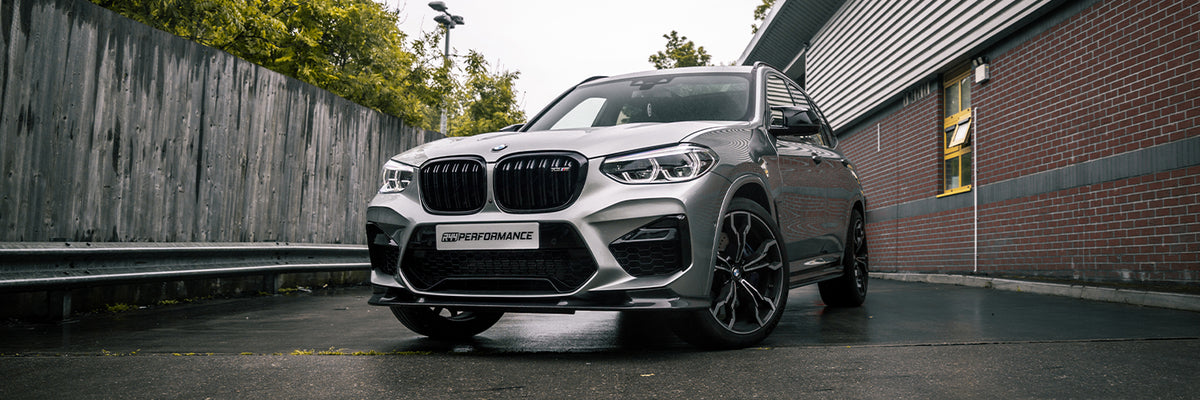
BMW X3M & X4M Ownership Guide: Reliability, Problems & Mods
The BMW X3M and X4M combine the performance of BMW’s S58 engine with everyday SUV practicality, making them some of the most appealing high-performance all-rounders available. However, like any modern M car, ownership comes with specific considerations around ride quality, running costs, reliability, and modification potential.
This guide has been created using real-world ownership feedback and hands-on workshop experience from R44 Performance, answering the most common questions buyers and owners ask before and after purchase. From known issues and servicing expectations to suspension upgrades, tuning safety, and long-term reliability, this page is designed to give clear, honest answers based on experience rather than speculation.
Whether you are considering buying a BMW X3M or X4M, or already own one and want to improve how it drives day-to-day, the FAQs below cover everything you need to know.
Ownership & Buying
Yes. In real-world ownership, the BMW X3M and BMW X4M are generally reliable when maintained correctly. Most ownership complaints relate to suspension firmness, tyre wear, and factory calibration rather than major drivetrain failures. The S58 engine itself has proven to be very strong.
Absolutely. These cars represent some of the best value ways to access the S58 platform, often costing significantly less than equivalent M3 or M4 models while offering similar straight-line performance and tuning potential. A full service history and recall verification are essential.
Check suspension condition, tyre wear patterns, brake condition, and alignment history. Uneven tyre wear is common on factory geometry. On sunroof-equipped cars, confirm the roof drainage channels have been maintained to avoid water ingress issues.
Mechanically they are identical. The X3M offers better rear visibility and practicality, while the X4M prioritises styling. Running costs, reliability, and driving experience are effectively the same.
Yes. LCI models benefit from updated infotainment, interior improvements, and subtle suspension calibration changes. Ride comfort is marginally improved, though the core character remains firm.
With correct servicing and sensible use, the S58 engine is capable of very high mileage. Well-maintained examples can comfortably exceed 100,000 miles. Awareness of service & recall history is important before pursuing performance upgrades.
Performance & Driving
Extremely fast. Power delivery feels comparable to an M3 or M4 despite the SUV body style. In real-world conditions, especially overtaking and motorway driving, performance is effortless. xDrive and high ground clearance also make it fast in real-world conditions.
The weight is well hidden at speed thanks to strong chassis control. BMW actually chose to let journalists review the cars on track, which shows their confidence in the platform's dynamic capabilities. However, compared to lower M cars, rapid direction changes can still reveal its SUV proportions.
The factory suspension is very stiff, prioritising body control over comfort. This results in a harsh ride on uneven roads, particularly noticeable on UK surfaces and at lower speeds.
On smooth motorways, yes. The cabin is refined and seats are supportive. On poor road surfaces, the stiff suspension can become tiring over longer distances.
The higher seating position, easier access, and extra space make the X3M and X4M more practical daily cars. However, they lack the compliance and agility of an M3 or M4 on rough roads.
Many owners feel the factory setup is too firm for typical UK roads. This is one of the most common reasons owners upgrade suspension early in ownership.
Yes. Grip is extremely high, body roll is well controlled, and overall stability is impressive for the vehicle’s size.
Modifications & Upgrades
Suspension upgrades and geometry correction provide the biggest improvement to daily driving. These changes transform ride quality and reduce excessive tyre wear.
High-quality coilovers significantly improve compliance compared to the factory suspension, even without adaptive damping. Body roll is reduced and the car becomes far more usable on real roads.
Lowering can improve both stance and handling. When done correctly with matched components, it often improves ride quality rather than making it worse.
No. Poorly chosen components can cause issues, but properly engineered setups such as KW coilovers, AST H.A.S kit or lowering springs from H&R/Eibach generally ride better than stock while offering improved control.
Yes. This is widely regarded as the single most effective upgrade for daily usability. We recommend KW V3 coilovers. Despite losing the EDC, the ride is much improved and more compliant.
Upgraded pads and fluid are usually sufficient. Full brake kits are rarely necessary unless the car is driven aggressively and repeatedly.
Mild tuning is generally safe. The S58 engine has strong headroom, but drivetrain components and known weak points should be addressed first. For example, the rear differential bolt is known for failing after repeated launches.
Suspension refinement, correct alignment, tyre choice, and transmission recalibration offer the biggest real-world improvements.
Reliability & Problems
Harsh ride quality, rapid tyre wear, exhaust valve rattles, and suspension-related noise are the most common complaints. Major engine or gearbox failures are rare.
The S58 is generally very reliable. BMW issued recalls for specific build periods relating to rod bearings (mid-2019) and main bearings (late-2021 Competition models). These affected a limited number of cars but should always be checked before modifying.
The ZF automatic gearbox is mechanically strong. However, factory calibration can feel sluggish, which is a common driver complaint.
No widespread issues. Water ingress due to blocked sunroof drains can cause electrical damage if maintenance is neglected.
Short suspension travel combined with stiff factory damping causes sharp reactions to road imperfections.
Aggressive tuning increases wear on drivetrain components. Conservative tuning with supporting upgrades has minimal impact when done responsibly.
Cooling can become a limitation on higher-powered builds, particularly under repeated high-load use.
Tyres, brake components, suspension parts, rear diff bolts on tuned cars, and factory exhaust valve mechanisms.
Running Costs & Ownership
Servicing costs are higher than standard BMW models but in line with other high-performance vehicles. Main dealers charge between £500-£1,000 for basic servicing, depending on which items are required (spark plugs, cabin filter, brake fluid etc.) Independent garages & specialists are typically more affordable.
Mid-20s mpg on motorway journeys and high-teens in mixed driving are typical.
Yes. Weight, power, and factory alignment mean tyres wear quickly, particularly on Michelin PS4S. Geometry correction helps but does not eliminate wear.
Insurance is typically high due to performance and repair costs, though this varies significantly by driver profile.
Running costs are higher than a standard SUV but reasonable for the performance level once common weak points are addressed.
Annual servicing or every 10,000 miles is recommended, regardless of BMW’s extended service intervals.
Yes. Due to weight and performance, these components tend to wear faster than on smaller M cars.
Buying A High Mileage BMW X4M Video Series
Follow along as R44 Performance transforms a high-mileage BMW X4M Competition